Resolution · July 26, 2026
What is resolution in pictures, a classroom note
What is resolution in pictures, taught with a newspaper halftone beside a camera file. A classroom note on marks, not menus.
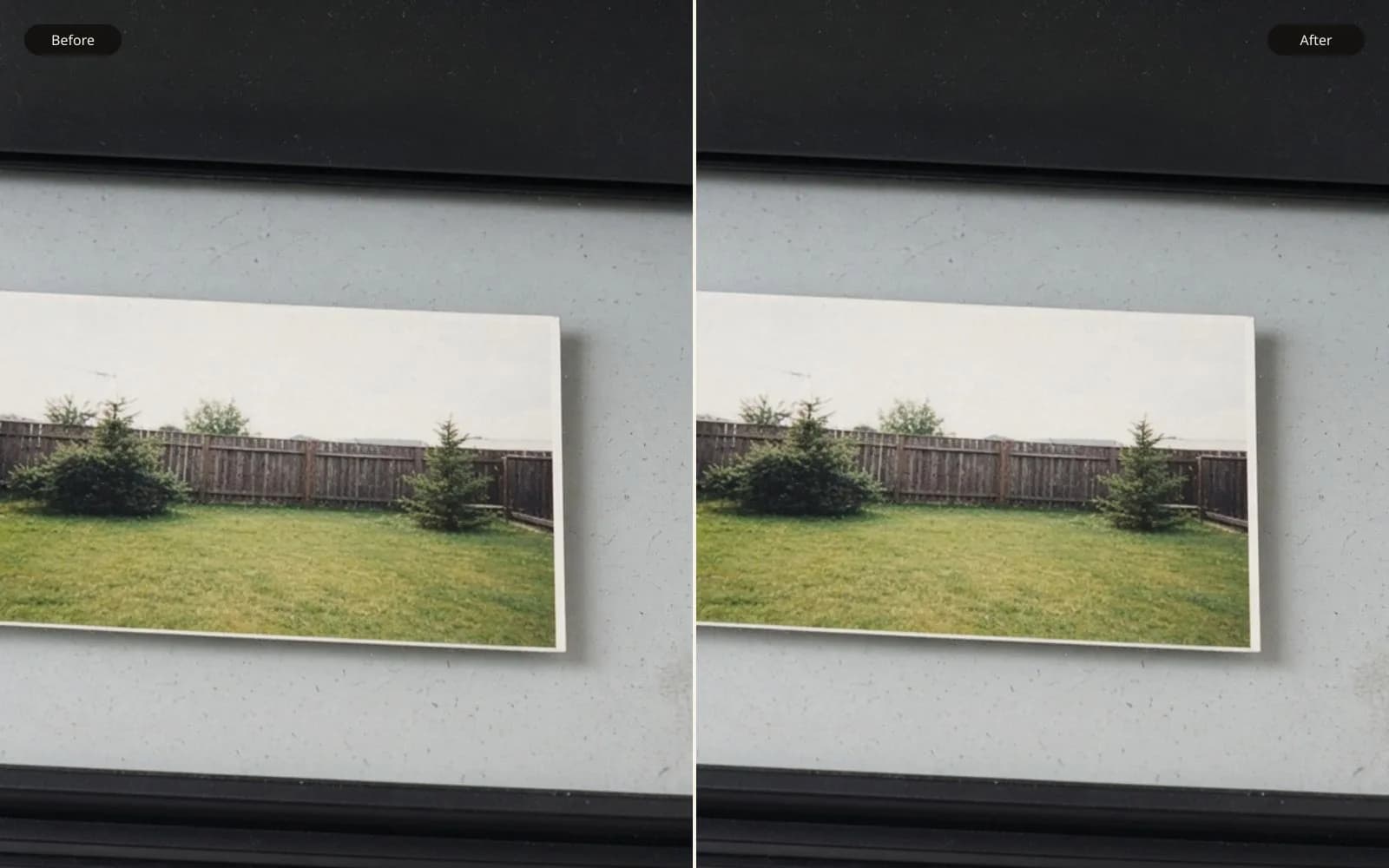
In a classroom the honest definition is the pixel grid, not the word HD. Upscale 2× only after the class has counted the pixels they already have.
The question on the board was what is resolution in pictures, and I did not want the period to end with a slider. This is a classroom note. It is not the counter conversation I have with a client who brought a file and a frame size. That one lives under what a picture's resolution means at the counter. Here we have a newspaper, a magazine page, a camera file of the same mayor, and a ruler. The point is that "resolution" names how many separate marks fit across the picture, and the mark is not the same object in ink as it is in a sensor.
I brought the morning paper and a weekly magazine and a body that writes a 6000 by 4000 file. We did not open an upscaler until the last ten minutes, and then only to watch it invent a dot that the halftone had already decided. The invention was the lesson's villain. The ruler was the lesson's tool.
TL;DR. A newspaper photo is a field of halftone cells, each cell one tone, the dot changing size. I counted about 85 cells to the inch on the front-page picture and about 130 on a magazine page. A 3.5-inch news picture is a few hundred cells across, not thousands. A camera file of 6000 by 4000 is a grid of photosites, one color each before demosaic, and the mayor's face in that file was about 900 pixels wide. Scanning the newspaper records the dots. Photographing the mayor records the mayor. Calling both of those "resolution" is fair only if you say which mark you mean.
The mark on the newsprint
I handed out loupes and a paper ruler because a screen would have turned the halftone into a picture of a halftone and started a second argument. On the front page the mayor stood at a podium, the picture about 3.5 inches wide and 4.2 inches tall. I asked everyone to count dark dots along one inch, in the direction the screen runs, on a mid-gray patch of the jacket. Counts came back between 80 and 90. We used 85. I am not publishing a law of newspapers. I am publishing the count on this page, this morning, with these eyes. A coarser patch near the edge of the press run looked closer to 80. The center held 85.
Eighty-five cells per inch, across 3.5 inches, is about 300 cells across the picture. Down 4.2 inches is about 357. The whole portrait is on the order of 300 by 360 tones. That is the resolution of this printed picture, in the only unit the paper actually has. It is a small number next to a phone's advertisement, and it is the number that let this city recognize a mayor for a century. Recognition does not require a pore.
Each cell is not a pixel. In a gray patch the dot is a medium blob. In a dark patch the blob is large and the paper shows through as a small hole. In a highlight the blob is a speck. One cell, one tone. You cannot store an eyelash in a cell that has already spent itself on "dark gray." Students wanted the cell to be a little picture. I had them look at the highlight in the eye. It is a cluster of small specks, and the catchlight is one or two specks wide. There is no further detail inside the speck. The speck is the detail.
Color on this page was the same screen in four inks, rotated so the dots do not all sit on the same angle. Where the angles fight, you see a rosette. The rosette is a printing structure. It is not a pattern in the mayor's suit. I had to say that twice, because a student had started to sketch the rosette as fabric.
The magazine, a finer screen, still a screen
The weekly had a larger photo of the same press conference, about 5 inches wide. Counts on the jacket landed around 130 per inch, with one student at 150 and one at 120. We walked the loupe until we were counting the same row. 130 is the number I will defend for this page. Five inches times 130 is 650 cells across. The face in that photo is smoother than the newspaper's face at a normal reading distance. At the loupe it is still dots. The smoother look is more cells per inch, not a different kind of truth.
I scanned both pages later, for the archive of the class, not because the scan is a better picture. At 150 ppi the newspaper scan turned into a plaid that is not in the paper. That plaid is moiré, the scan grid beating against the 85-line screen. At 300 ppi the plaid changed scale and did not disappear. At 600 ppi I could see the individual dots, and the mayor's cheek was clearly a field of blobs. The scan's resolution was high enough to resolve the printing. It was not high enough to invent a cheek the printing never had, though the file was now thousands of pixels wide and a careless person could call it high resolution. The pixels were samples of ink, not samples of skin.
This is the trap I want the class to remember with their hands. You can raise the resolution of a scan until you are beautifully recording the wrong thing. A 600 ppi scan of an 85-line halftone is a high-resolution picture of dots.
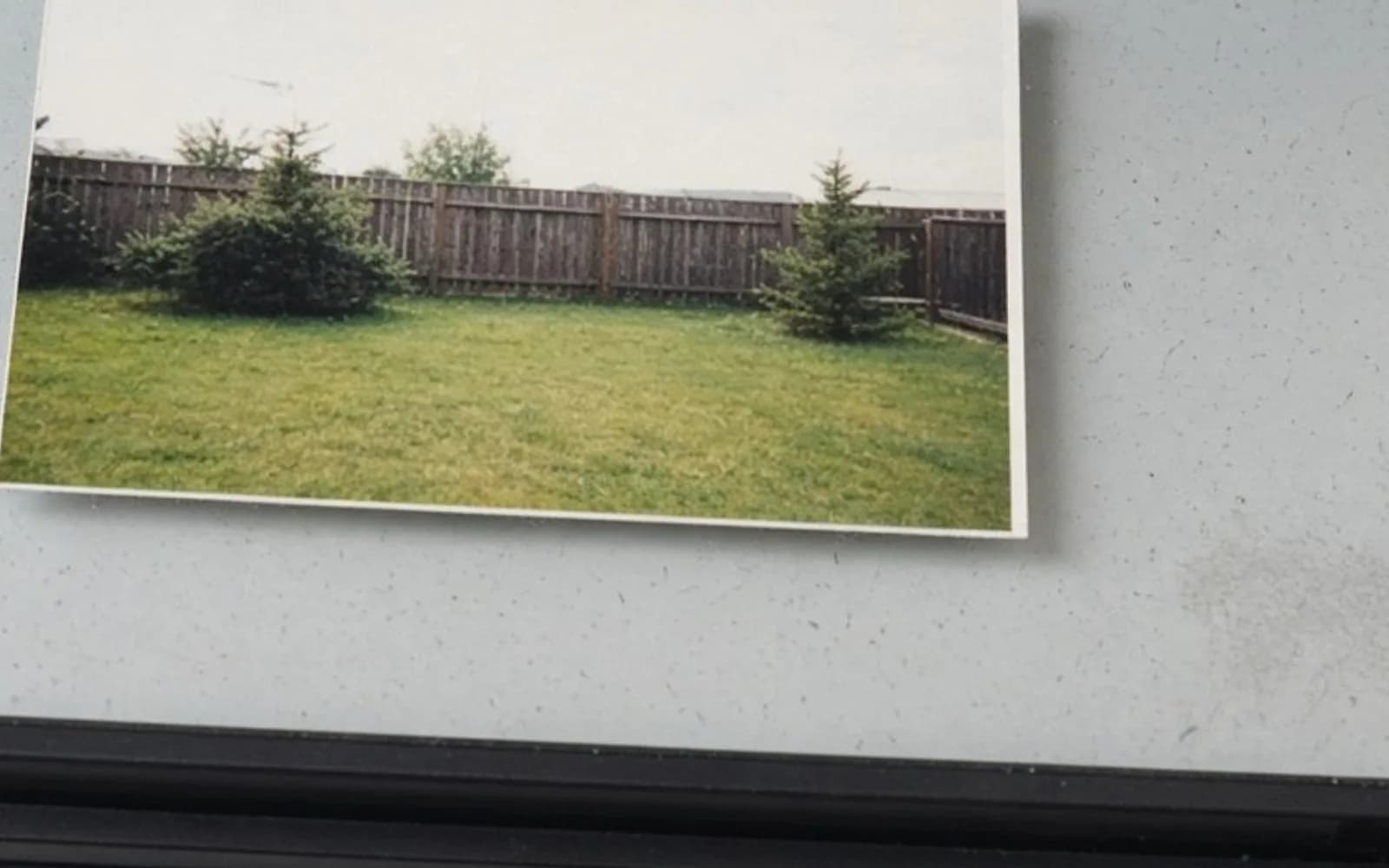
The generated sample on the worksheet is a flat scene under speckle, a sun and a figure broken into grains. It is not a halftone. A halftone's dots change size with the tone, and this sample's speckle is more like noise. I still use it, because from the back row it starts the right argument: a field of marks can look like a photograph at a distance and like a material up close. We then look at the real paper, where the marks are organized, and we do not pretend the sample is the paper.
The camera file, a different mark
The body was set to write 6000 by 4000. We copied one frame into the class folder as mayor-raw-converted.jpg, a JPEG made from the raw with modest settings, no extra enlargement. 6000 times 4000 is 24 million photosites. I wrote 24 million on the board and then I crossed out the sentence a student offered, which was "24 million colors."
The sensor has a color filter. Each site recorded red or green or blue, in the repeating pattern this body uses, and the converter filled in the missing two colors from the neighbors. So the file has 24 million stored numbers for color, arranged as a full-color grid, and it does not have 24 million independent three-color measurements. A fine black-and-white edge can be carried more honestly than a fine color edge. I did not assign a modulation number. I do not want a fake chart in a note that started with a ruler. I want the class to stop saying "24 megapixels" as if each pixel were a tiny complete camera.
We measured the face in the file, not the advertising. The head, chin to hair, was about 900 pixels tall, and about 620 wide. Eyeglass reflections were visible, two small bright shapes with a dark gap, and a highlight on a ring was a few pixels across. None of that exists as a separate mark in the newspaper version. The newspaper's whole picture was about 300 cells wide. The face inside it was maybe 80 cells wide. Eighty cells can say "glasses." They cannot say the shape of a reflection.
I also had the class photograph the newspaper with the same body, filling the frame with the printed face. That file was also 6000 by 4000, and it was sharp, and it was a picture of dots. High resolution, low news. The resolution of the capture was the camera's. The resolution of the subject was the halftone's. Both statements fit in one folder. The folder is the exam.
Side by side, the numbers that are allowed to be compared
I will compare counts only after naming the mark. Cells are not pixels. I still put them in one table so the scale difference is visible, and the column headers are there to stop a sloppy equality.
| Picture | Mark | Count I will defend | Across the face, roughly |
|---|---|---|---|
| Newspaper, this morning's front | halftone cell, about 85 per inch | about 300 by 360 for the whole picture | on the order of 80 cells |
| Magazine page | halftone cell, about 130 per inch | about 650 across a 5-inch picture | closer to 150 cells |
| Scan of the newspaper at 600 ppi | scanner sample of a dot | thousands of pixels of ink | dots, not skin |
| Camera file of the mayor | photosite, then a demosaiced pixel | 6000 by 4000 for the frame | about 620 by 900 |
| Photo of the newspaper | photosite aimed at ink | 6000 by 4000 of dots | the screen, enlarged |
The magazine face is softer than the camera face and sharper than the newsprint face, at reading distance, which matched the counts. A student said the magazine "looked higher resolution" before we counted, and the count agreed. I like it when the eye and the ruler land together. I do not like it when the eye is aimed at contrast and calls a harsh JPEG sharper than a gentle one. That confusion is a different week. This week the paper was honest and the dots were visible.
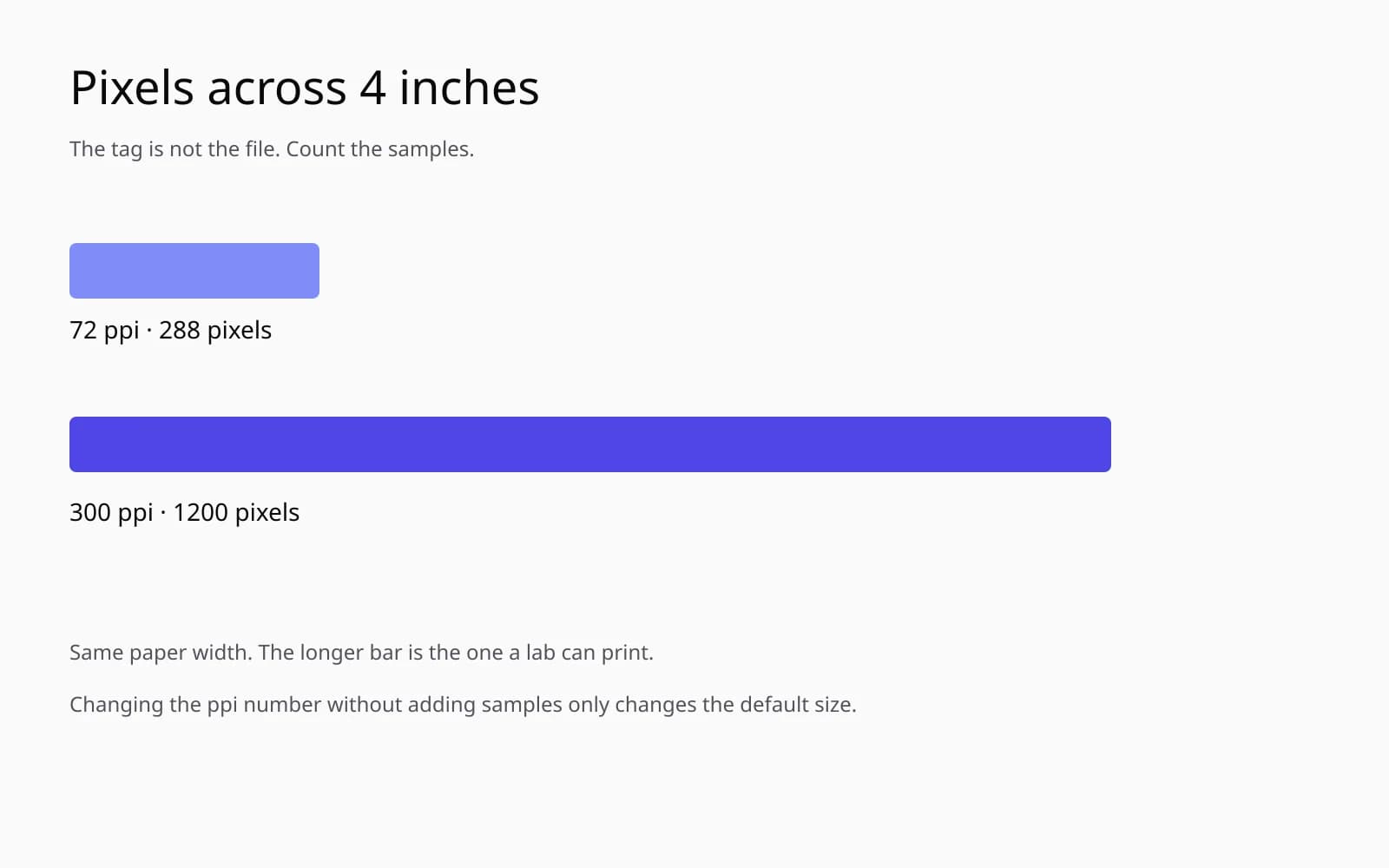
How to read the pixel pair off a file, when we leave the paper behind, is how to tell image resolution. Changing a tag or resampling, which is a temptation as soon as a portal appears, is how to change the resolution of an image. I mentioned both and then closed the laptops again. The paper was still the assignment.
What enlargement does to each mark
On the halftone
We scaled a crop of the 600 ppi scan up by 4× in a plain resample. The dots became larger dots, blurrier, and the mayor did not gain an eyelash. Then we ran the same crop through the AI image upscaler. The dots tried to become skin. In places they succeeded in looking like skin, a smeared cheek with pores that follow no pore on the printed page, because the page had no pores. In other places the screen survived as a welt. The model has a prior for faces and a weaker prior for halftone screens, so it partially "corrected" the printing out of existence. That is a destruction of the artifact and a fabrication of a face. For a class about marks, it is a perfect failure. We do not want the dots removed unless we are explicit that we are leaving the record of the paper.
I printed the upscaled cheek at 4 inches wide. From the door it looked like a photograph. Under the loupe it looked like neither a halftone nor a lens. Students who had counted 85 dots per inch were harder to fool. Students who had only looked from the door thought we had recovered the mayor. Distance is a kind of resolution too. Far enough away, 300 cells and 24 million samples converge on "a person at a podium." The class is about not standing that far away while you decide what a file contains.
On the camera file
The camera file does not need a 4× to be a picture. We made a small one anyway, on a copy, and compared an eyelash to the original at matched size. The upscale added a second bright rim on the glasses that the raw conversion did not have. The enhance photo quality pass, used mildly on a separate copy that I had first downscaled to imitate a web export, put grain back that looked photographic and did not match the downscaled file's actual grain. I showed the mismatch and we moved on. The board did not say "never use these." The board said "these tools propose marks. Resolution talk is about which marks were recorded."
A downscale is the inverse lesson and it is cleaner. We reduced the camera file to 600 pixels wide, about the magazine's cell count across a similar picture, and printed it small. It resembled the magazine more than it resembled the original file, not because a JPEG is a halftone, but because the number of independent tones across the face had been thrown away. You can spend resolution. You cannot get it back from a prior except as a guess. The guess may be a good guess. It is still a guess, and the ruler cannot confirm it, because the ruler was never in the room when the guess was formed.
Exercises I will run again
These are the ones that survived contact with a room of people who wanted a single number.
- Count halftone cells per inch on a midtone, on a real page, and multiply by the picture's width in inches. Write the unit "cells," not "pixels."
- Scan the same page at two ppi settings and say which setting resolved dots and which setting made moiré. Do not call the moiré detail.
- Open a camera file, read the pixel pair, and measure one subject in pixels with a crop, not with the megapixel slogan.
- Say out loud that a color filter means one recorded color per site. Do not say "24 million colors" unless you want to defend it.
- Photograph a printed photo and describe two resolutions that are both present: the camera's grid, and the print's screen.
- Enlarge a halftone with a model and circle one invented pore. Find the same place on the paper and confirm the pore is not there.
- Stand across the room, note that the pictures converge, and then sit back down and use the loupe anyway.
The last item is attitude. I have graded people who stood across the room for their whole careers and called it taste. Taste is allowed after the count. Taste before the count is how a portal's 300 ppi rule gets applied to a newspaper scan that is already nothing but dots.
What I will not tell this class
I will not tell them a universal screen ruling for all newspapers. We counted this paper. Another press uses another line count. The method travels. The number 85 does not, except as this morning's result.
I will not tell them the camera's 6000 by 4000 is "enough for anything." It was enough for eyeglass reflections at the distance I stood. It would not be enough for a face that occupied 80 pixels in the same frame. Resolution is a count across a subject, not a badge on a body. A 24-megapixel frame with a tiny head is a low-resolution portrait and a high-resolution picture of a room.
I will not tell them the upscaler is a liar in every use. On a photograph that lost a modest amount of scale, a proposal can be a fair print. On a halftone, the proposal replaces the mark we came to study. The refusal is specific. Specific refusals are the point of counting.
At the end I asked what resolution the mayor picture had, and I did not accept one number. The newsprint had about 300 cells across. The magazine had about 650 across its wider frame. The camera had 6000 pixels across the frame and about 620 across the face. The scan had whatever I set, spent on dots. Four answers. The student who wanted one answer was asking which object we were talking about, and that question is the whole course. Once the object is named, the count is ordinary arithmetic, and ordinary arithmetic is enough to keep a model from quietly swapping one object for another.
Questions that come up after the file is open
Is a halftone dot the same kind of mark as a camera pixel?
No. A halftone cell carries one tone by changing the size of a dot. A camera pixel is a sample from the sensor, one color at that site before the color filter is interpolated. Both get called resolution. They are different marks.
Why does a scan of a newspaper show a pattern the page did not seem to have?
You resolved the screen. The pattern is the printer's dots, and it can beat against the scanner grid as moiré. Those dots are not extra detail in the person's face.
Does a 24-megapixel file contain 24 million independent colors?
It contains that many photosites. A typical sensor recorded one color at each site and the other two were interpolated. The file is large. It is not 24 million separate three-color measurements.
Which picture of the mayor has higher resolution, the paper or the camera?
Across the face, the camera file did, in the session I measured. The newspaper photo was a few hundred halftone cells wide. The camera face was about 900 pixels wide, and it showed eyeglass reflections the paper could not.